
"Angola coffee market"
200 article(s) found

A brief introduction to the consistent treatment method of grinding degree and baking degree of Angolan boutique coffee beans
The market for Angolan coffee: in the mid-1970s, 98 per cent of Angola's annual coffee exports were Roberts (probably the best in Africa), but total production fell in 1990. Most of Angola's coffee was exported to the United States, the Netherlands and, of course, Portugal in the 1970s. Angola produced about 180000 tons of commercial coffee a year.

African coffee Angora coffee beans
Angolan coffee Angola Angola has been growing coffee for more than 100 years, and its output has been the first in Africa until 1960, reaching 225000 tons in 1979, ranking second in Africa and fourth in the world. The output in 1992 was 5000 tons. Sisal production is second only to coffee, and the level of per unit yield is higher. In 1986, the output reached 20,000 tons, sisal ranked second in Africa both in terms of output and export volume.

Price of Angolan coffee beans
Angolan coffee Angola Angola has been growing coffee for more than 100 years, and its output has been the first in Africa until 1960, reaching 225000 tons in 1979, ranking second in Africa and fourth in the world. The output in 1992 was 5000 tons. Sisal production is second only to coffee, and the level of per unit yield is higher. In 1986, the output reached 20,000 tons, sisal ranked second in Africa both in terms of output and export volume.

A brief introduction to the treatment method of grinding degree and baking degree of high-quality Angolan boutique coffee beans
The Secretary-General of the African Coffee Organization (Coffee Organization), Joseph Farrayasarko, said today that Angola is expected to regain its position as a major coffee producer in the world due to the launch of a nationwide coffee planting campaign. In analyzing the global financial crisis and the situation of the international coffee market, Sako said that there are still gaps in the international coffee market. Angolan coffee should not only improve its output, but also its quality.

The production of Angolan coffee beans ranked first in Africa until 1960.
Angola's Angola, which has been growing coffee for more than 100 years, ranked first in Africa until 1960 and reached 225000 tons in 1979, ranking second in Africa and fourth in the world. The output in 1992 was 5000 tons. Sisal production is second only to coffee, and the level of per unit yield is higher. In 1986, the output reached 20,000 tons, sisal ranked second in Africa both in terms of output and export volume. Luo'an, Xinhuanet

A brief introduction to the cultivation of boutique coffee beans in Angola, a former coffee country, geographical location, climate and altitude
Angolan Agriculture Minister Afonso Pedro Kanga revealed that Angolan coffee production this year is expected to double that of last year to 12000 tons. In 2008, in order to regain its status as a major coffee producer in the world, the Angolan government introduced a plan to receive a preferential micro-loan of US $5000 per farmer to grow coffee. Angola used to be one of the largest coffee producers in the world, producing coffee in 1974

A brief introduction to the history and culture of the origin and development of high-acidity Angolan boutique coffee beans
The origin of coffee in Angola: 98% of the coffee in Angola (Angola) is Roberts coffee. The best brands in Angola used to be Ambriz, Amborm and NovoRedondo, all of which are known for their consistent quality. Angola was once one of the largest coffee producers in the world, with coffee production reaching a record 22.5 in 1974

A brief introduction to the history and culture of the origin and development of fine coffee beans in Angola, once a big coffee country.
The Angolan government is currently working on a development plan to revitalize coffee production in order to restore coffee production across the country to the level of the 1970s. Manuel Dias, director of the Angolan Coffee Agency, recently told the local press that the Angolan government's plan mainly includes expanding growing areas, increasing investment, working hard to support coffee farmers and promoting fine varieties. Uige, Bengo

A brief introduction to the history and culture of the origin and development of high-quality Angolan boutique coffee beans
Flavor: not available in the West in recent years, but used to be known for its high acidity recommended roasting methods: medium to deep roasting ★: general Angolan coffee market: in the mid-1970s, 98% of the coffee exported annually by Angola (Angola) was roasting (probably the best in Africa), but total production declined in 1990. Most of Angola

Description of Flavor and Grinding degree of Angola Coffee Bean introduction to the taste producing area of varieties
In the 1970s, Angola produced about 180000 tons of commercial coffee per year. With an area of 161000 hectares and an annual output of 99550 tons, Uige Province is the largest coffee grower.

A brief introduction to the consistent description of flavor, taste and aroma characteristics of Angolan boutique coffee beans
The Angolan government has also decided to promote improved varieties of coffee according to local conditions. According to information released by the Angolan Coffee Agency, fine coffee is more suitable for cultivation in most provinces of Angola and is the first choice for large-scale promotion by the government. At the same time, Angola will also introduce coffee seeds from Brazil and Costa Rica. Officials say Angola's coffee production is expected to reach 4000 tons in 2006, compared with 2005.

A brief introduction to the flavor, taste and aroma characteristics of Angolan boutique coffee beans that can hardly be bought.
Angola's ambassador to the United States, Agostinho Tavares, told Jornal de Angola on Monday in New York that the first batch of coffee exported from Angola to the United States (a total of 11 tons) had arrived in the country. Tavares also said that the coffee is the first batch of agricultural products exported to the United States after the entry into force of the African growth and opportunity Act (AGOA). AGOA stipulates that all kinds of products from sub-Saharan African countries can be used.

Introduction to the origin of coffee-the characteristics, origin and brand market of Angolan coffee
Professional baristas please follow the coffee workshop (official Wechat account cafe_style) Portuguese news agency reported that Angolan coffee brand Caf Cazengo will export its coffee products to China. Jos Gonalves, the project manager, said the brand would export a total of 54 tons of coffee to China, the United States and Portugal, but did not disclose the export price.

A brief introduction to the flavor, taste and aroma characteristics of high quality Angolan boutique coffee beans
Angolan Agriculture Minister Afonso Pedro Kanga revealed that Angolan coffee production this year is expected to double that of last year to 12000 tons. In 2008, in order to regain its status as a major coffee producer in the world, the Angolan government introduced a plan to receive a preferential micro-loan of US $5000 per farmer to grow coffee. Angola used to be one of the largest coffee producers in the world, producing coffee in 1974

Angola, once one of the largest coffee countries in the world.
Josefa, Secretary General of the Coffee Organization of African countries? Correa? Sako said on the 10th that Angola is expected to regain its position as a major coffee producer in the world due to the nationwide coffee planting campaign. In analyzing the global financial crisis and the situation in the international coffee market, Sako said that there are still gaps in the international coffee market, and Angolan coffee should not only increase its output, but also improve its quality.
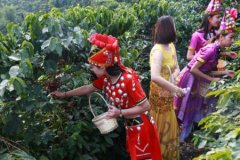
A brief introduction to the flavor, taste and aroma characteristics of Angolan boutique coffee beans, once a big coffee country
The Angolan government is currently working on a development plan to revitalize coffee production in order to restore coffee production across the country to the level of the 1970s. Manuel Dias, director of the Angolan Coffee Agency, recently told the local press that the Angolan government's plan mainly includes expanding growing areas, increasing investment, working hard to support coffee farmers and promoting fine varieties. Uige, Bengo
The characteristics of real estate coffee
Angola is the fourth largest coffee industry in the world, but it produces only a small amount of Arabica coffee and is of high quality. The origin of coffee in Angola: 98% of the coffee in Angola (Angola) is Roberts coffee. The former best brands in Angola are Ambriz, Amborm and NovoRedondo, all of which are of consistent quality.
The characteristics of several real estate coffees
Angola is the fourth largest coffee industry in the world, but it produces only a small amount of Arabica coffee and is of high quality. The origin of coffee in Angola: 98% of the coffee in Angola (Angola) is Roberts coffee. The former best brands in Angola are Ambriz, Amborm and NovoRedondo, all of which are of consistent quality.

Angola Coffee Flavor description, Grinding characteristics, introduction to the Price of Fine Coffee
The Angolan government is currently working on a development plan to revitalize coffee production in order to restore coffee production across the country to the level of the 1970s. Manuel Dias, director of the Angolan Coffee Agency, recently told the local press that the Angolan government's plan mainly includes expanding growing areas, increasing investment, working hard to support coffee farmers and promoting fine varieties. Uige, Bengo

A brief introduction to the treatment method of grinding degree and baking degree of Angolan boutique coffee beans which are almost impossible to buy.
Angola is the fourth largest coffee industry in the world, but it produces only a small amount of Arabica coffee and is of high quality. The origin of coffee in Angola: 98% of the coffee in Angola (Angola) is Roberts coffee. The former best brands in Angola are Ambriz, Amborm and NovoRedondo, all of which are known for their consistent quality